What is Marketing Funnel?
In the digital age, understanding how to reach potential customers and turn them into loyal ones has become more important than ever. The marketing funnel emerges as a tool that defines and optimizes this process.
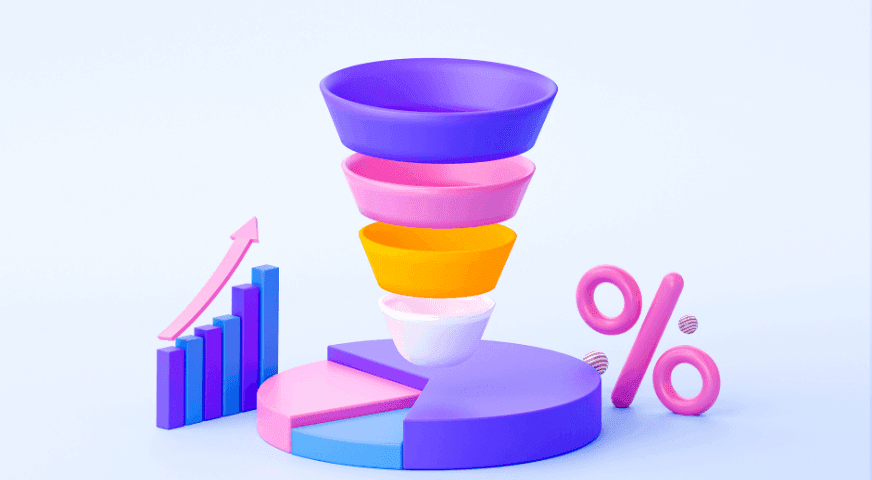
The marketing funnel is a visual representation of the entire journey a customer goes through with a brand or product. This model covers the process from the moment customers start to become aware of the brand or product until the moment they make a purchase decision. Each stage represents a specific phase in the customer’s decision-making process. As customers progress through this funnel, their relationship with the brand deepens, and their commitment increases.
Why is the marketing funnel important?
The digital purchasing process does not progress in a linear fashion. The digital marketing funnel reflects real consumer behaviors such as entering and exiting the funnel, transitioning between different stages of the funnel, and shopping from different stores and geographical regions.
Since customers can shop whenever and wherever they want, brands must consider how they can reach them at every stage of the customer journey. Within the digital marketing funnel, even during the evaluation stage, consumers can conduct extensive research and comparisons on the internet. This stage is no longer limited to comparing products in a store. Many brands adapt to this new shopping method by establishing sincere and valuable relationships with customers throughout the funnel, thus embracing this purchasing path that is not very linear.
Marketing funnels are important both for acquiring potential customers and for ensuring their progression through the funnel. During the recognition and evaluation stages, brands use various campaigns to attract the attention of new potential customers. During the decision-making and loyalty stages, they prioritize campaigns to ensure that existing potential customers continue moving forward in the funnel and eventually become loyal supporters of the brand. Digital marketing and marketing funnels are extremely important for determining the channels, tactics, and content that attract the most attention, generate returns, and ultimately increase a brand’s sales.
The stages of the marketing funnel
There is no single, universally accepted model for the marketing funnel. Some approaches emphasize that consumers go through three, four, five, or more stages during their shopping journey. In general, the common feature of these different models is that they allow for a better understanding of the consumer’s decision-making process by breaking it down into stages. However, a four-stage funnel consisting of awareness, consideration, conversion, and loyalty is one of the most frequently applied approaches. In the following sections, we will explain in more detail the main characteristics of this four-stage marketing funnel and why it is so effective.
Awareness
Brand awareness expresses the degree of consumer familiarity with a brand. This familiarity means being aware of qualities such as the brand’s name, message, tone, style, value, and culture. The brand awareness process, which begins with consumer research, continues with steps to attract customers to the brand and help them recognize and remember it. The goal is to ensure that this brand is the first one that comes to a customer’s mind during the purchasing process by using the relevant customer touchpoints.
To increase awareness, brands want to appear on the platforms where consumers are. For this purpose, many methods such as television, digital advertising, audio ads, social media campaigns, and content marketing can be employed. The fact that 84% of customers start their online product searches on digital channels other than the brand’s own website further underscores the importance of these touchpoints. The main goal at the awareness stage is to be the first brand that comes to customers’ minds. Thus, when customers decide to buy a product, your brand is the first one that appears in their memory.
Consideration
The goal of consideration-oriented marketing is to increase the likelihood that consumers will evaluate a particular brand and its products during the shopping process. Marketing messages should offer a solution to a specific problem, highlight a certain area of interest, or answer consumers’ questions. At this stage, customers try to familiarize themselves with a brand and understand the features that distinguish it from similar brands. During the consideration stage, brands should provide information to customers and help them see how the product or solution they offer will meet the customers’ needs. Examples of marketing solutions focused on the consideration phase (the middle of the funnel) include positive customer reviews, customer testimonials, case studies, and webinars.
Conversion
The goal of the conversion stage is to demonstrate to customers that the chosen brand provides a solution to their problems or meets their needs, thereby encouraging them to purchase a particular product or service. Also known as the “decision” or “purchase” stage, this phase represents a significant opportunity to invest in strategies that ensure the brand is chosen in its category and that its products stand out from similar products. During this stage, it is important to have a detailed product page on the website and provide a quality customer service experience that reassures customers about their purchase decisions.
This part of the funnel is generally considered relatively easy to measure, as you can usually track which ad click directly led to a purchase transaction. However, it is important not to forget that customer interactions in the previous two stages have a direct impact on whether customers eventually convert.
Loyalty
Brands can support the formation of loyalty by offering a seamless shopping experience and quality products or services. Brands that maintain and strengthen their relationship with consumers after the purchase can remain the first brand that comes to mind for customers.
Positive interactions during and after the purchase stage can help turn a customer into a long-term customer. Brands that do not have a plan to support customer loyalty may see many customers move on to another brand after just one purchase. Since acquiring a new customer costs on average five times more than retaining an existing one, some refer to this stage as the “engagement” stage. To build loyalty, it is important to continue interacting with customers who have purchased your brand’s products or services.
Successful interactive marketing methods such as relationship-building campaigns via email, brand activation campaigns on social media, and loyalty programs can be effective in creating brand loyalty among customers. The main goal at this stage is to gain loyal and satisfied customers who become brand advocates and lifelong customers.
What is the difference between marketing and sales funnels?
Sometimes the terms “marketing funnel” and “sales funnel” are used interchangeably. There are even those who merge the two terms and use the phrase “marketing-sales funnel.” In fact, these two funnels are different parts of a whole. Every company or organization’s marketing and sales departments have different objectives. Their funnels support these distinct objectives. The task of the marketing department is to build and manage the brand, ensure awareness, and acquire potential customers who are likely to make a purchase. On the other hand, the sales department focuses on increasing product or service sales both initially and on an ongoing basis. Sharing the data obtained by one department with the other can help teams work in sync and deliver the best customer experience.