What Is Marketing?
Marketing is the set of strategies and activities that introduce a product or service to its target audience, build its value and stimulate sales. Companies study customers' needs and wishes and offer products and services that match them. Effective marketing strategies increase brand awareness and help expand the customer base.
Digital marketing, traditional marketing, content marketing and social media marketing are the main directions of this field. The main goal of marketing is to create a strong connection between the company and the customer and to earn long-term trust. By analysing customer behaviour, companies develop more effective advertising and sales strategies.
Marketing tries to attract customers' attention by offering solutions that fit their needs. In a competitive market, companies differentiate themselves by applying innovative marketing approaches. Successful marketing campaigns not only increase sales but also strengthen the company's position in the market, and the continuous development of marketing is closely tied to technology and customer expectations.
What are the main principles of marketing?
The main principles of marketing are a set of essential rules for successfully introducing products and services to the market. These principles are based on understanding customer needs, creating value for them, and gaining a competitive advantage in the market. Properly applied marketing principles help companies achieve long-term success and enhance customer satisfaction. The main principles of marketing include:
- Customer orientation: Understanding the needs and desires of customers is the foundation of successful marketing. Companies must offer products that provide solutions to their problems.
- Creating value: Customers do not just buy products; they seek values such as quality, convenience, and prestige. Companies must differentiate themselves in the market by offering unique value to customers.
- Competitive advantage: Conducting market research and implementing innovative strategies to outperform competitors allows businesses to establish a stronger market position.
- Contiuosus development: Marketing strategies should be constantly updated, market trends should be monitored, and new technologies should be implemented.
What are marketing communications?
Marketing communication consists of the strategies and tactics that companies use to establish effective and consistent communication with their target audience and potential customers to increase awareness of their products and services, strengthen brand value, and support sales. Marketing communications encompass the processes of delivering value to customers and meeting their expectations through various channels and methods.
The main elements of marketing communication are usually listed as advertising, public relations, content marketing, social media marketing, sales promotion, and direct marketing. These tools help companies reach their target audience, highlight the benefits and value of their products and services, increase brand awareness, and ensure customer loyalty. A successful marketing communication strategy delivers relevant and consistent messages to customers by integrating different communication tools and channels in a coordinated manner.
The concept of Integrated Marketing Communication (IMC) refers to the coordinated and consistent use of different tools and channels in the marketing communication process. The IMC approach enables companies to effectively combine and align various communication tools and channels to achieve their marketing goals. As a result, the messages delivered to customers become more impactful and powerful, enhancing brand image and consumer loyalty.
What are marketing mixes?
Marketing mixes encompass the essential tools and components used to successfully implement marketing strategies and tactics. The most well-known marketing mix is called "4P." Additionally, there are models such as 7P, 4C, 8P, and SAVE.
4P model: The 4P model is a classic marketing mix that forms the foundation of marketing strategies and consists of product, price, place, and promotion components.
4C model: The 4C model represents a customer-oriented marketing approach and includes the components of customer value, cost, communication, and convenience. This model aims to build marketing strategies based on customer needs and values.
8P model: The 8P model takes the 7P model one step further by considering the performance factor along with all other components. This model is particularly used in areas where service quality and customer satisfaction are crucial.
SAVE model: Developed for companies focusing on digital marketing and innovation, this model consists of the elements solution, access, value, and education. The SAVE model aims to make marketing strategies more effective by focusing on customer needs and value creation.
What are the types of marketing based on target audiences?
Marketing segmentation (target audience) can be broadly classified into two main categories: B2B (Business-to-Business) and B2C (Business-to-Consumer).
B2B (Business-to-Business)
B2B marketing refers to the marketing activities that businesses carry out to engage with other businesses. This type of marketing usually involves longer sales processes, higher transaction values, and more complex products or services. B2B marketing strategies focus on understanding business needs and purchasing processes. B2B marketing activities include product and service presentations, participation in exhibitions and conferences, content marketing, and email marketing.
B2C (Business-to-Consumer)
B2C marketing refers to marketing activities that are directly aimed at end consumers. This type of marketing typically involves shorter sales processes, lower transaction values, and simpler products or services. B2C marketing strategies focus on understanding consumer needs, preferences, and purchasing behaviors. B2C marketing activities include advertising campaigns, social media marketing, influencer marketing, and other methods.
What are the types of marketing in terms of marketing methods?
Marketing types can generally be divided into two main categories: traditional marketing and digital marketing. Both categories aim to promote products and services and stimulate sales using different tools and methods, each offering unique advantages and disadvantages. Traditional marketing is effective in reaching a broad audience and strengthening brand recognition but can be costly and difficult to measure. Digital marketing, on the other hand, allows for more targeted and measurable results at lower costs but requires constant adaptation to changing technologies and trends. A successful marketing strategy can be formed by utilizing the advantages of both types and applying them in alignment with the company’s goals.
What is traditional marketing?
It covers marketing activities conducted through traditional channels. Methods used in this type of marketing include television and radio advertisements, newspaper and magazine ads, posters, billboards, and direct mail campaigns. Additionally, face-to-face marketing activities such as events, fairs, and sponsorships are also considered part of traditional marketing.
Examples of traditional marketing include:
- Television advertisements: Commercials broadcast on television channels are used to reach a wide audience and enhance brand awareness.
- Radio advertisements: Advertisements aired on radio stations are utilized for marketing activities targeted at specific geographic regions or listener groups.
- Newspaper and magazine ads: Printed ads in newspapers and magazines help promote products and services to readers.
- Brochures and flyers: Printed materials distributed for product and service promotion are used to directly reach potential customers.
- Posters and billboards: Large-format advertising panels and posters are used in high-traffic areas and city centers to enhance brand recognition.
- Direct mail marketing: Letters, brochures, or catalogs sent via mail provide special offers and information to specific target audiences.
- Events, fairs, and sponsorships: Face-to-face marketing activities help businesses establish direct contact with customers and business partners.
- Telemarketing and phone sales: Reaching potential customers via phone calls to promote and sell products and services.
What is digital marketing?
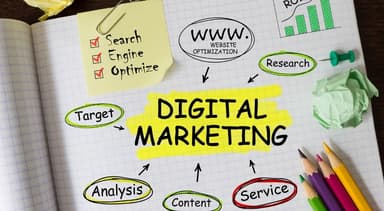
Digital marketing encompasses marketing activities carried out using the internet and digital technologies. Methods used in this type of marketing include email marketing, social media marketing, search engine optimization (SEO), content marketing, influencer marketing, mobile marketing, visual and video advertising, and targeting through digital communication channels. Digital marketing, with technologies such as data analytics and targeting, offers more measurable and personalized features compared to traditional marketing.
Examples of digital marketing include:
- Website: An online platform that businesses use to promote products and services, share information, and interact with customers. It serves as the main foundation in digital marketing.
- Social media marketing: Sharing posts and advertisements on platforms like Facebook, Twitter, Instagram, and LinkedIn to reach the target audience.
- Email marketing: Establishing communication by sending regular email newsletters and informative messages to customers and potential customers.
- Content marketing: Creating valuable content such as blog posts, e-books, infographics, and videos to attract customer interest and provide information.
- Search engine optimization (SEO): Ensuring websites rank higher in search engine results to attract organic traffic.
- Search engine marketing (SEM): Paid visibility in search engines through pay-per-click (PPC) campaigns on platforms like Google Ads.
- Influencer marketing: Collaborating with influential individuals with a large audience to promote products and services and increase awareness.
- Video advertising: Reaching the target audience through visual and video ads on platforms like YouTube, Vimeo, and other websites.
- Mobile marketing: Engaging customers through mobile applications, SMS, and MMS marketing activities conducted via mobile devices.
How is the marketing process carried out?
To conduct marketing, a business must first have a clear understanding of its target audience and customers. Various marketing channels can be used to reach the target audience. These channels include traditional marketing methods and digital marketing methods. Once the target audience of the business is identified, a suitable marketing strategy should be developed. The marketing strategy should include the use of various marketing channels in alignment with the business's goals and budget. This strategy should also incorporate the 4P elements, such as product/service, price, place, and promotion.
Marketing activities are essential for businesses to engage with customers and meet their needs. Marketing efforts consist of a series of actions aimed at direct and indirect communication with customers. These activities may include advertising, campaigns, events, social media posts, and the design and distribution of promotional materials for products and services. Marketing activities should be planned according to the business's objectives, such as ensuring customer satisfaction, increasing brand awareness, and boosting product/service sales. Marketing efforts should align with the other departments of the business and be implemented as an integrated part of the overall strategy.
What is marketing research? Why is data analysis important?
Marketing research and data analysis are essential processes that help businesses identify the needs and expectations of their target audience, track market trends, and optimize their marketing strategies. Marketing research includes various tools and techniques used to understand consumer behavior and preferences. These tools include surveys, focus groups, observation methods, and customer data analysis. Marketing research allows businesses to establish direct contact with their target audience and gain a better understanding of customer needs and expectations.
Data analysis, on the other hand, is a process that helps businesses interpret the data they collect and derive meaningful insights. It is a method used by businesses to understand customer behavior, market trends, optimize marketing strategies, and measure business performance. Through data analysis, businesses can develop data-driven marketing strategies and reach their target audience more effectively.
What is a marketing strategy?
Marketing strategies are long-term plans that businesses use to reach their target audience, increase brand recognition, boost sales, and ensure customer loyalty. Businesses identify their target audience and develop marketing strategies tailored to them. A business's marketing strategy includes the 4P elements: product/service, price, place, and promotion. Within the framework of their marketing strategies, businesses aim to differentiate their products and services to gain a competitive advantage