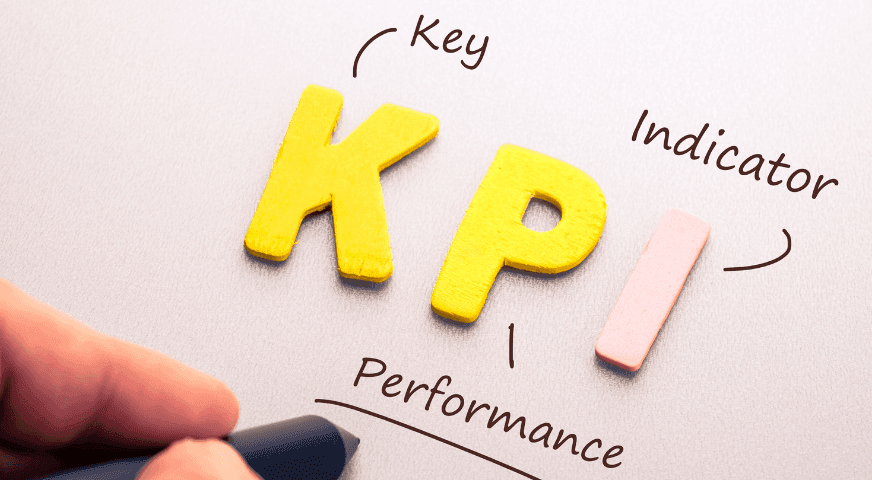
What is KPI?
KPI (Key Performance Indicator) is an indicator used to measure the success of a company or project. KPIs aim to achieve a certain goal or measure a performance. For example, the KPI of a sales team may be the volume of sales, while the KPI of a project may be the percentage of on-time completion. KPIs are an important tool for evaluating the success of a company or project and typically help a company reach its strategic goals.
What are the benefits of KPI?
KPIs play an important role in measuring and managing success in the business world. However, sometimes either employees do not work correctly and sufficiently, or the KPIs are incorrectly determined, which prevents them from achieving their goals. This is not just an individual failure, but also causes the entire team and management to lag behind. A stressful work environment, uncertainty, and loss of motivation become inevitable. That is precisely why KPIs are viewed negatively by many employees. Yet, if KPIs are truly implemented correctly, it is impossible not to see their benefits.
Properly defined KPIs contribute to the development of the employee, allowing them to enhance their skills and see the results of their work more clearly. At the same time, this increases the employee’s motivation and morale, because they understand how important the work they do is for the company. KPIs are also an objective evaluation tool for managers – instead of uncertain and subjective evaluations, they help make decisions based on concrete and measurable results. The KPI system ensures organized and efficient management of work, raises the overall performance of the team, and facilitates future planning. Recognizing the importance of KPIs and using them correctly creates positive outcomes for employees, management, and the company as a whole.
What if there is no KPI?
In the business world, something being considered successful depends on meeting certain conditions. At the forefront of these conditions is sustainability. Short-term achievements may be coincidences, but true success only gains value when it is stable and long-term. Stability is an inseparable part of success. Next comes measurability, because it is impossible to determine how successful a result is if it cannot be evaluated. Therefore, for a result to be considered a success, it is necessary to have specific measurement criteria.
Accordingly, it would not be wrong to say that KPI is an irreplaceable concept for the correct evaluation of success, or more broadly, outcomes. It provides you with numerical indicators to measure and draw correct conclusions about issues such as the progress of individual or team performance, the outcome of the work done, and the level and sustainability of success. You can measure, graph, compare these indicators and, in short, use them in any way you want. As a result, you can get a report and see your future more clearly.
How is KPI determined?
KPIs are used to determine the goals needed to achieve the objectives of a company or project. First, the main objectives of the company or project should be identified. Then, KPIs are determined by considering how these objectives can be measured. KPIs should be appropriate measurement criteria for evaluating goals. For example, a KPI that measures the amount of sales can be used to monitor the execution of a goal. When determining KPIs, the following criteria should be taken into account:
- Measurable: KPIs must be concrete and measurable.
- Goal-oriented: KPIs must be appropriate for measuring the goals.
- Time-bound: KPIs must be measured within a certain timeframe.
Taking these criteria into account, the KPIs determined will help accurately assess the level of success of companies and projects.
Why is it important to determine KPIs?
KPIs (Key Performance Indicators) are indicators that measure the success of businesses and projects and are crucial for achieving strategic goals. Well-established KPIs make it possible to evaluate the current level of performance and compare it with expected results. Since it is difficult to determine whether something is successful if it cannot be measured, KPIs act as effective decision-making tools.
Determining KPIs correctly is important for several main reasons:
- Measuring goals – It is possible to track how well a company or project is achieving its objectives and make adjustments if necessary.
- Evaluating performance – It is possible to determine how successful operations are and discover opportunities for improvement.
- Decision-making – By analyzing the results obtained, better strategies can be formed.
- Control and optimization – By analyzing the management processes of a company or project, efficiency can be increased.
- Development and improvement – It can be determined which areas need to be strengthened in order to operate more effectively.
KPIs help reduce the complex structure of operations to a more manageable level, facilitating strategic decision-making. This enables companies to increase their performance and achieve long-term success.
How are KPIs calculated?
The method of calculating KPIs may vary depending on the organization’s goals and objectives. For example, while sales growth can be a KPI for an e-commerce business, customer satisfaction can be a KPI for a service company. It is important to follow these steps for accurate KPI calculation:
- Defining goals: The company must clearly identify which targets it aims to achieve.
- Selecting measurement criteria: It is necessary to determine which indicators need to be monitored to achieve the goals.
- Collecting and analyzing data: The data necessary for calculating KPIs must be gathered and analyzed.
- Evaluating the results: KPI indicators should be analyzed to assess whether the organization has reached its goals.
For example, to measure customer satisfaction, it is important to collect surveys from customers and analyze the results. Accurate KPI calculation helps evaluate the company’s performance and improve development strategies. Therefore, calculating KPIs precisely and systematically is extremely important.