What are the differences between B2B and B2C Marketing?
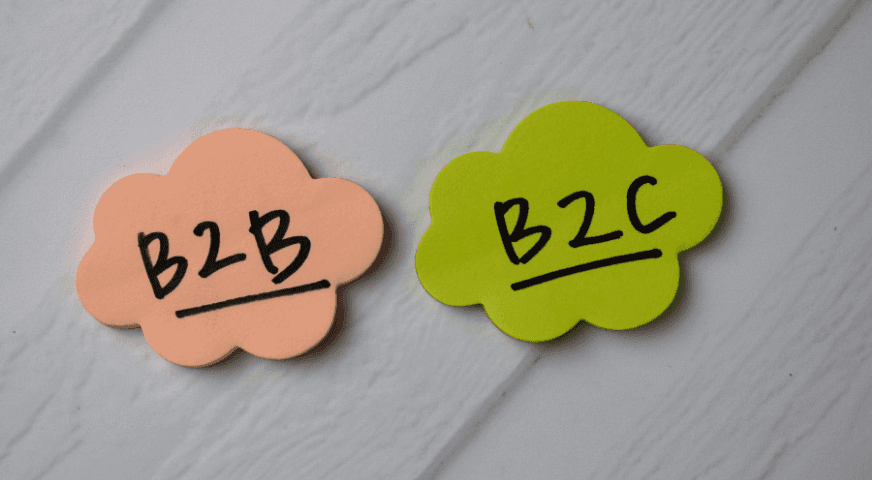
B2B marketing is often confused with B2C marketing or business-to-consumer marketing. These are two concepts that serve different audiences and purposes in marketing. In B2B marketing, the seller communicates with individuals who make decisions on behalf of an organization, whereas in B2C marketing, individual end consumers are informed about a product or service. Let's take a closer look at these types of marketing, examining their similarities and differences.
What is B2B marketing?
B2B (Business to Business) marketing refers to the marketing strategies and processes that a company applies to sell its products or services to other businesses. Unlike marketing aimed at individual consumers (B2C), B2B marketing focuses on promoting trade and business collaborations between companies.
B2B marketing is primarily based on relationships established to support companies' production processes, supply raw materials or equipment, meet operational needs, and utilize business services. This marketing model relies on long-term collaborations, detailed purchasing processes, and rational decision-making.
B2B marketing strategies widely include content marketing, digital marketing, exhibitions and conferences, social media, and email marketing. In general, B2B marketing is more technical and information-oriented, aiming to address customers' business needs.
What is B2C marketing?
B2C stands for "Business to Consumer" and refers to the business model where companies sell their products or services directly to end consumers. Today, particularly with the rise of online shopping, the B2C model is widely used.
Some of the most common examples of B2C include e-commerce websites, restaurants, clothing stores, and supermarkets. In reality, any business that offers a product or service utilizes the B2C model for its promotion. The mobile apps we use daily, the purchases we make through websites, and even some social media platforms can be considered part of this model.
The primary goal of this business model is to meet consumers' needs quickly and conveniently. After all, no one wants to spend hours wandering around stores, right? Thanks to the convenience brought by the internet, we can now order what we need with just a few clicks, without leaving our homes. Purchasing home appliances from platforms like Amazon or doing our weekly grocery shopping through market applications is entirely part of the B2C model.
However, to succeed in the B2C model, it is not enough to simply offer a quality product or service. An effective marketing strategy, a user-friendly website or application, and excellent customer service are also essential. With the acceleration of digital transformation, the B2C model is becoming increasingly popular, and more and more businesses are transitioning to this system.
What are the differences between B2B and B2C marketing?
In the business world, marketing strategies are shaped according to the target audience. The main differences between B2B (business-to-business) and B2C (business-to-consumer) marketing models are related to customer type, purchasing process, and communication methods. The successful implementation of both models requires different approaches, and a proper understanding of these differences helps businesses build effective strategies. The differences between B2B and B2C marketing can be summarized as follows:
Target Audience: It is clear that the main difference between B2B and B2C marketing lies in the target audience. B2C marketing is focused on individual consumers and their personal needs. This includes everyday decisions such as buying groceries, finding the perfect gift, or choosing a necessary service. B2B marketing, on the other hand, targets organizations, companies, and professionals. This strategy takes into account business-related factors such as organizational needs, budgets, and return on investment (ROI).
Purchasing Process: The purchasing process in B2B markets is more complex and multi-staged compared to B2C. B2B purchases typically involve multiple stakeholders, longer sales cycles, and larger budgets. In contrast, B2C purchases are simpler and faster. Individual consumers usually make quick purchasing decisions for themselves or their families.
Emotional vs. Rational Approach: B2C marketing leverages the power of emotions to increase the desire for a product or service. Storytelling, lifestyle portrayals, and emotional messages are widely used here. B2B marketing, however, prioritizes a more logical approach. Efficiency, cost savings, and problem-solving capabilities are highlighted. Data, facts, and case studies are used to emphasize the financial value and benefits of a product or service.
Content Strategy and Communication Style: There are also significant differences in content strategy between B2B and B2C marketing. B2C content is usually short, visually appealing, and designed to quickly capture attention. B2B content, on the other hand, is more detailed and informative, providing in-depth knowledge. The goal of B2B marketing is to educate potential customers and build trust in the company’s expertise and solutions.
Building Relationships: Customer relationship building is crucial in both B2B and B2C marketing. However, the methods and longevity of these relationships differ. In B2B marketing, customer relationships often continue beyond the initial sale and evolve into long-term partnerships. In B2C marketing, relationships are primarily based on purchases, and long-term engagement usually occurs only if the customer makes repeat purchases.
What are the similarities between B2B and B2C marketing?
Although B2B and B2C marketing are directed at different target audiences, they share common aspects. Understanding customer needs, utilizing multichannel approaches, and building strong customer relationships are essential for creating effective marketing strategies for both businesses and individual consumers. These similarities form the key principles that help marketers succeed in both areas.
Goal-oriented: Both B2B and B2C marketing aim to attract potential customers and convert them into buyers. This goal-driven approach is often managed and measured through key performance indicators (KPIs) that track the effectiveness of a company’s marketing campaigns.
Utilization of multichannel marketing: Both models use multiple channels (websites, social media, email, etc.) to reach their target audience.
Need to understand the audience: Both require a deep understanding of the needs, behaviors, and pain points of their respective target audiences to create effective marketing strategies.
Use of content marketing: Both can leverage content marketing strategies to engage their target audience and establish their brand as a trusted source of information.
Importance of customer relationships: Both recognize the significance of building and maintaining strong customer relationships.
Although B2B and B2C marketing target different audiences, their shared principles form the foundation of successful marketing strategies. In both models, understanding customer needs, utilizing content marketing, and establishing effective multichannel communication are essential. Building and maintaining strong customer relationships is the key to long-term success for both businesses and consumers. Therefore, companies that properly understand and apply both marketing models can gain a competitive advantage in the market.